

Why Locally-Made Blinds Outlast Imported Ones
Key Takeaways
- Australian made blinds and shutters are engineered for local conditions, harsh UV, coastal salt, humidity and wide temperature swings, which is exactly where cheaper imported product tends to fail first.
- Local manufacturing delivers a genuine made to measure fit, componentry that meets Australia's mandatory corded window covering safety standard, and warranty support you can actually access.
- Vision Blinds & Shutters has been supplying and installing Australian made window furnishings for Sydney homes since 2006, backed by a free measure and quote and a mobile showroom that comes to you.
Two roller blinds can look identical in a product photo. Hang them in a west facing Sydney window and give them three summers. One still tracks straight, holds its colour and rolls smoothly. The other has faded unevenly, the fabric has begun to curl at the edges, and the mechanism has developed a rattle nobody can source a part for.
Most of the time that difference comes down to where and how the product was made. Locally manufactured window furnishings are built for the conditions they end up living in, and just as importantly, they are backed by a supply chain you can still reach when something needs attention. Here is what actually separates Australian made window blinds and shutters from imported alternatives, and why the gap matters more here than in almost any other market.
Our Climate Is Harder on Window Coverings Than Most
Australia sits under one of the highest UV loads in the world, and a window covering absorbs the worst of it. Behind glass, temperatures climb well beyond what the room ever feels, and that heat works on fabric coatings, plastics and powder coated finishes every single day.
Add the humidity that settles into Sydney bathrooms and kitchens, the salt carried inland from the coast, and the swing between a 40 degree Penrith afternoon and a cold Blue Mountains morning, and you have a set of conditions most northern hemisphere products were never specified to handle.
A product engineered for a milder market is not defective, it is simply designed to a different brief. Fabric that holds its colour perfectly well in a European window can chalk and fade in an Australian one, and plastic components that stay flexible in a temperate climate can go brittle after a few seasons of direct sun. Locally produced ranges start from the opposite assumption, that the product will cop a beating.
What "Australian Made" Actually Means
It pays to know what the label is promising. Under the rules governing the Australian Made logo, a product qualifies when its last substantial transformation happened in Australia, meaning local processes changed imported inputs into something fundamentally different in nature and character. The old requirement that 50 per cent of production costs be incurred here was removed back in February 2017, so cost alone is no longer the test.
In practice that means the phrase covers a broad spectrum, from genuine local manufacturing to something closer to final assembly. The way to cut through it is to ask specific questions. Where is the fabric cut, welded and rolled? Where are the tubes, brackets, headrails and hardware sourced? Where are shutter panels built, sized and finished? A manufacturer working out of an Australian factory will answer those without hesitation, and the answers will line up with the lead times and warranty terms they quote.
Made to Measure Beats Made to Fit
Sydney housing stock is not standardised. A federation cottage in Penrith, a 1970s brick veneer in Western Sydney and a new build in Glenmore Park present three very different sets of openings, and few of them are perfectly square.
Imported ranges are frequently built to stock sizes, then trimmed, packed out or fudged on site to cover the gap. It works, until you notice the light leak down one edge or the panel that fouls on the architrave. Local manufacturing lets every drop, panel and frame be cut to the millimetre for the opening it belongs to, which is the single biggest reason locally built product looks better on day one and still operates cleanly years later. Nothing is under strain, because nothing was forced to fit.
Compliance Is Built In, Not Bolted On
Australia regulates corded internal window coverings under a mandatory safety standard, and the obligations sit with the supplier and the installer rather than the homeowner. Warning labels must be present on packaging and attached to cords, installation instructions must be supplied with the product, and the installer must fit it to the manufacturer's instructions and attach a label carrying their own name and contact details.
The technical detail is unforgiving. Loose cords must not form a loop 220mm or longer below a height of 1,600mm, any cord guide fitted below that height has to withstand 70 newtons of tension without releasing, and cleats cannot be installed below 1,600mm at all.
A locally made product arrives with the compliant hardware and documentation as standard, and the team fitting it does this every day. Product bought direct from an overseas seller often turns up without compliant components, without instructions, and with nobody local answerable for the install.
Where the Difference Shows Up in Blinds
Blinds live or die on their fabric and their mechanism. In a locally manufactured roller, the fabric is specified for Australian sun and cut and welded rather than stitched, so the edges stay clean and stable. The tube, clutch, chain and brackets are matched to the size and weight of the drop rather than supplied as a one size solution, which is why a well made roller keeps tracking straight instead of creeping across the tube.
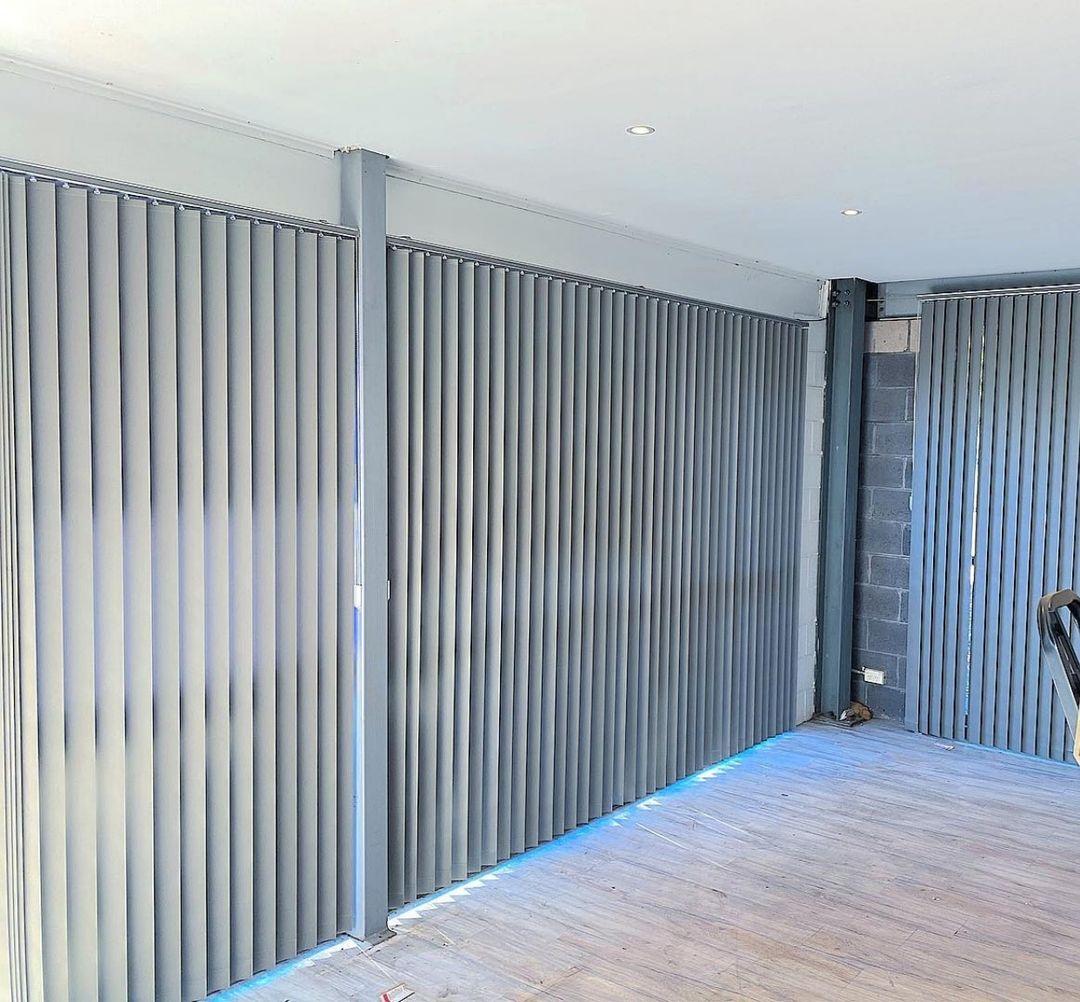
The same logic runs through the rest of the range. Day and night rollers depend on two fabrics indexing accurately against each other, Lumen blinds rely on precise banding, Romans and Venetian blinds need consistent fold spacing, and panel glides and verticals need tracks that stay true across a very wide opening.
All of that is a tolerance problem, and tolerance is where local production earns its keep. Whether the choice is blockout, light filtering or a sunscreen weave, ordering from an Australian factory also means the exact colour can be reordered later, rather than hoping the next shipping container carries the same dye lot.
Our roller blind range carries a five year warranty, and every drop is made for the window it was measured against.
Where the Difference Shows Up in Shutters
Shutters are the harder test, because they are structural. A panel has to stay flat and true while hanging off hinges, sometimes for decades, and any weakness in the material or the build shows up as sag, misalignment and louvres that no longer sit flush.
That is the thinking behind the locally built V-Spec range. V-Spec Poly Shutters use full PVC with an internal aluminium core, so panels stay rigid and shrug off steam and splashes in bathrooms, laundries and kitchens, and they carry a 20 year structural warranty.
V-Spec Hybrid Shutters pair responsibly sourced timber louvres with a fully waterproof PVC frame, producing louvres around 30 per cent lighter than the PVC equivalent, which allows wider panels, cleaner sightlines and better thermal and acoustic performance. Alongside them sit basswood, ThermoShade and traditional plantation options for homeowners who want a specific look.
Imported plantation shutters are typically shipped flat and assembled after arrival, which is where hinge alignment and panel squareness tend to drift. Building the panel and hanging it in the same country, to a measurement taken in your home, avoids most of that risk before it starts.
Support That Doesn't Cross an Ocean
The least glamorous advantage is often the one homeowners appreciate most. A warranty is only worth the accessibility of the company standing behind it. When a louvre needs replacing, a bracket wears out or a motor needs looking at, locally manufactured product means the spare part comes off the same production line that built the original, and the response is a phone call to a Sydney team rather than an email chain to a factory in another time zone.
Lead times follow the same pattern. Local production runs to a schedule you can be told about at the quote stage, not one dictated by freight availability and customs.
Why Sydney Homeowners Choose Vision Blinds & Shutters
We have been the blind guys with vision since 2006, a family owned team fitting Australian made to measure blinds and curtains across Sydney, Western Sydney, Penrith and the Blue Mountains, with more than 280 five star reviews behind us. Our window stylists bring the mobile showroom to you, so you can see fabrics, finishes and louvre profiles against your own walls, in your own light, before committing to anything.
The measure and quote is free and there is no obligation attached to it. If you are weighing up locally made options against something cheaper from overseas, we are happy to walk you through exactly what you get for the difference. Call 1300 658 465 or request a quote online, and we will find a time that suits you.
Australian Made Blinds FAQs
Are Australian made blinds more expensive than imported ones?
Usually yes on the initial quote, though the gap is smaller than most people expect once you compare like for like on fabric grade, componentry and warranty. Where the maths tips is replacement. A product that lasts fifteen years rather than five is cheaper per year of service, and there is no second installation cost. We are happy to quote a few price points so you can see the difference rather than guess at it.
Can I match colours across blinds and shutters if I fit them at different times?
This is one of the quiet advantages of ordering locally. Because the colour and finish records stay with the Australian production line, matching a new shutter to a blind fitted two years earlier is usually possible. With imported product, ranges get discontinued and dye lots shift between shipments, so an exact match becomes a gamble. If you are staging a renovation room by room, mention it at the consultation and we will note your finishes on file.
How can I tell where my existing blinds were made?
Compliant window coverings sold in Australia should carry warning labels and an installer's label with a name and contact details, and many locally manufactured products are marked on the bottom rail, the headrail or the inside of the tube. If there is no branding, no installer label and no paperwork, that tells you something in itself. We can also identify most componentry on sight during a visit.
Does a warranty transfer if I sell the house?
Manufacturer warranty terms vary by product and are worth confirming in writing rather than assuming. What matters more in a sale is that the product is documented, compliant and serviceable, since a buyer's inspection can flag non-compliant corded window coverings as a safety issue. Keeping your original invoice, installer label and warranty paperwork together makes the handover simple.
When is the best time of year to order?
Demand peaks heading into summer, so production schedules tighten from roughly September onward as households rush to get sun control in place. Ordering in late autumn or winter generally means a shorter wait and a more relaxed booking window for the install. If you are working to a renovation or settlement date, tell us early and we will build the schedule backwards from it.